


Imagine driving down a long, dusty highway in rural Rajasthan — the sun blazing overhead, the desert stretching into the horizon — when suddenly you see a crowd, garlands, flickering incense smoke, and a gleaming Royal Enfield Bullet motorcycle treated with reverence like a god. Strange, right? This is Om Banna Dham, the legendary roadside shrine in the Pali district where a motorcycle — not a traditional idol — has become a beloved deity. But how did this astonishing phenomenon come to be? Let’s dig into the untold truth behind the Om Banna story and explore why a bike became a deity in the desert heartland of India.
Who Was Om Banna? The Man Behind the Motorcycle
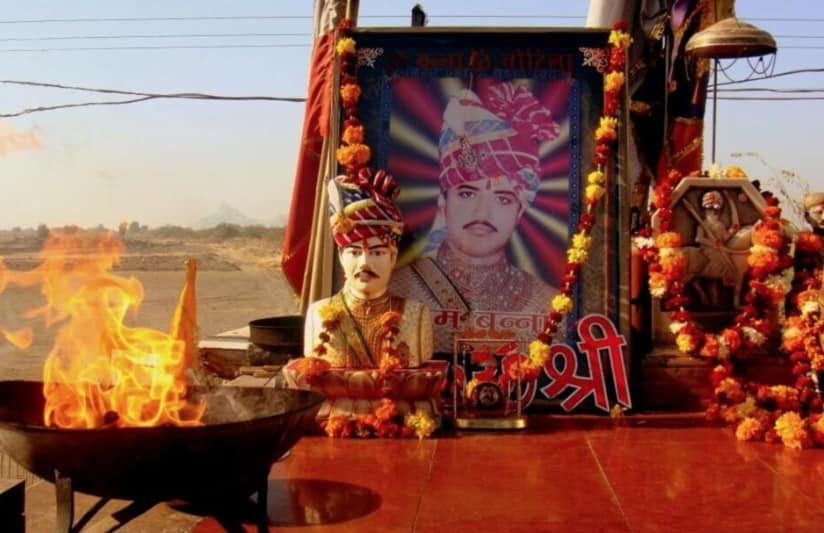
The roots of the story begin with a young man named Om Singh Rathore, affectionately known as Om Banna by locals. Born in Chotila village in Pali district, Rajasthan, Om was a vibrant young rider who loved his Royal Enfield Bullet 350cc motorcycle — a machine that symbolized freedom, adventure, and a spirited journey through life.
On December 2, 1988, Om met with a tragic accident while riding his Bullet back to his village from Pali. According to the legend, he lost control of the bike, collided with a tree beside the road, and died instantly. His lifeless body lay next to the crashed bike in a ditch — a heartbreaking end to a young life.
But this wasn’t the end of the story. It was only the beginning.
The Miraculous Return: When the Bike Refused to Stay Away
Usually, an accident like this would simply be filed in a police report and forgotten. But the events that followed were anything but ordinary.
The police took the bike from the accident site to the nearest police station. They assumed the local youth might want it back or that it was evidence in an accidental death case. However, the next morning, something bizarre happened — the motorcycle had vanished from the police station and was again found lying exactly where the accident occurred.
Puzzled, the officers brought the bike back, locked it with chains, and even drained its fuel — hoping to prevent it from being moved or started. But yet again, the next morning, the Bullet was discovered at the accident site. No one saw how it got there. No tracks, no explanations. Just the bike. Returned. As if by invisible hands.
Several attempts were made by the police to keep the bike at the station, but every time — with or without fuel — the bike mysteriously returned to the exact same roadside spot before dawn. Villagers began to whisper that this was no ordinary machine — something beyond human understanding was at play.
From Miracle to Deity: Birth of the Om Banna Dham
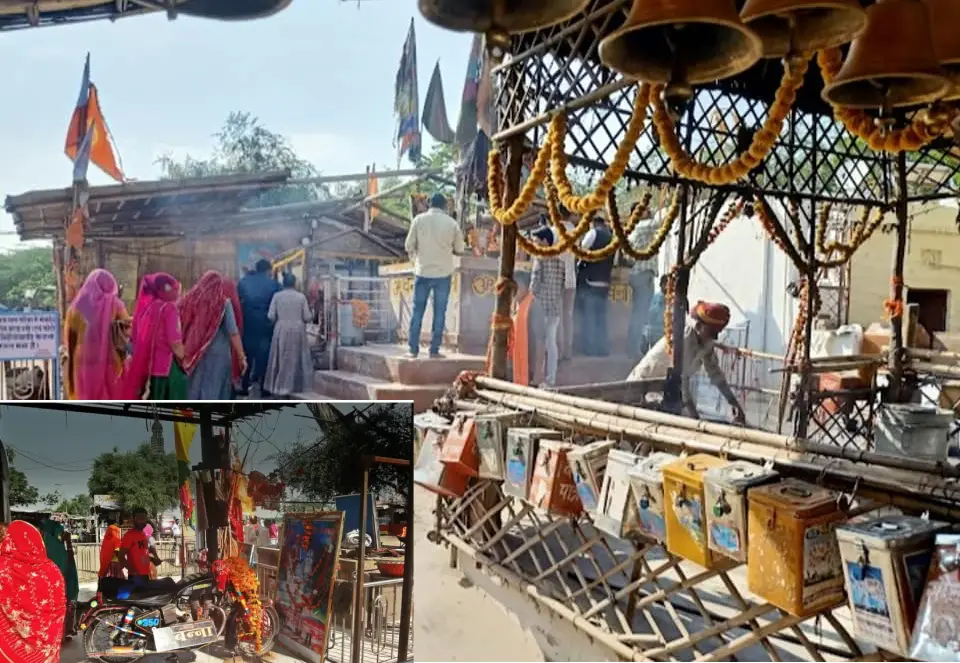
Word of the unexplained occurrences spread rapidly across nearby villages. People began to see the bike’s repeated returns not as mischief or coincidence, but as a supernatural sign — a hint that Om Banna’s spirit was still present and watching over that stretch of road.
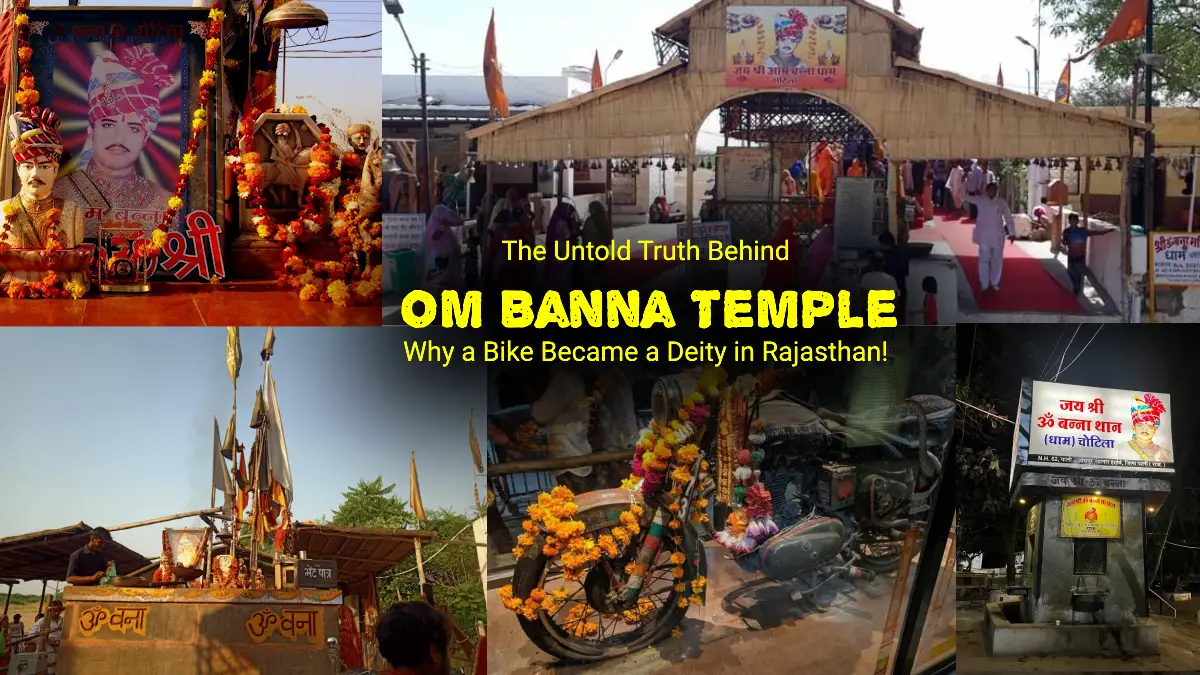
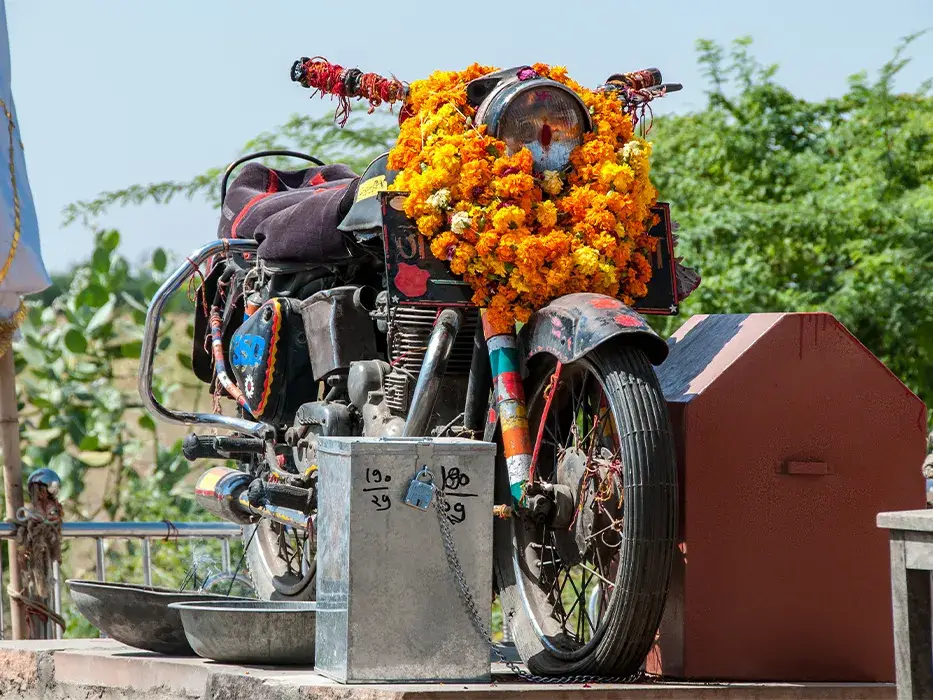
Before long, a small shrine began to take shape right at the accident site. The Royal Enfield Bullet — its registration number forever etched as RNJ 7773 — was placed on a raised platform, decorated with bright marigolds, red threads, and religious ‘tilaks’ (sacred forehead markings). Folks also set up a small shelter for the bike, and over time this humble setup became known as Om Banna Dham or the Bullet Baba Temple.
What makes this shrine even more extraordinary is that people worship the motorcycle itself, believing that om Banna’s spirit resides within it, guiding and protecting those who travel this often dangerous highway.
Why the Bike Became a Deity: Beliefs, Faith, and Safety
So why did people start worshipping a bike? The answer lies in deep human emotions — faith, fear, and the desire for protection.
1. A Protector on the Highway
The Pali-Jodhpur highway where Om Banna died has seen its share of traffic and accidents. Locals began believing that stopping at the shrine and paying respects would protect them from mishaps on the road. Some even think that since Om Banna loved riding, his spirit continues to watch over travelers and intervene when danger approaches.
Families, truck drivers, and bikers alike now consider it auspicious to bow, leave offerings, and seek Bullet Baba’s blessing before resuming their journey. Many swear that visiting the shrine spiritually safeguards them, significantly reducing their chances of meeting with misfortune.
2. Tangible Rituals and Offerings
Unlike traditional temples where deities are invoked through scriptures and priests, Om Banna Dham involves unique and unconventional offerings. Devotees leave incense sticks, flowers, sweets, and even small bottles of liquor at the shrine — a tribute believed to be accepted by Bullet Baba.
Some riders apply coloured tilak on the motorcycle’s fuel tank or tie bright red threads around its parts. Others touch the bike reverently or perform a small ritual before getting back on the road. These actions, though unusual to outsiders, are deeply meaningful for believers.
3. Collective Memory and Local Folklore
Over decades, the story of Om Banna and his miraculous bike has grown into well-worn local lore. Stories told by one generation to the next have amplified the legend and deepened the faith. What began as an enigmatic event became a symbol of divine protection in the collective consciousness of the region.
Real Stories from the Highway: Miracles and Encounters
Believers have their own accounts of inexplicable experiences tied to Om Banna:
-
Some travelers claim their vehicles started malfunctioning, only to resume working smoothly after stopping at the shrine and offering prayers.
-
Others recount avoiding serious accidents by making a quick visit to Om Banna Dham before hitting the road.
-
In local folk songs and tales, truck drivers tell of feeling an invisible presence riding along with them at night — a comforting sense that Bullet Baba is watching over them.
Whether true or not, these stories enhance the aura of mystery and deepen the bond between the shrine and the people who visit it.
Cultural Significance: What Om Banna Says About Indian Belief Systems
To outsiders, worshipping a motorcycle might seem strange, but the phenomenon makes cultural sense in the Indian context:
Faith Beyond Form
In Hindu and folk traditions, divinity is rarely restricted to human-like idols. Nature, animals, objects — even trees and rivers — can become sacred when infused with deep belief. Om Banna’s motorcycle fits into this tradition: a powerful symbol that transcends logical explanation and aligns with spiritual interpretation.
A Hero and a Guardian
Om Banna’s young age and tragic end perhaps make him even more relatable. People see him not as a distant mythological figure, but as someone from their own land — someone who loved riding and whose spirit continues to serve others.
Lessons in Respect and Safety
The shrine has also become an informal reminder about road safety. Locals often say — with both reverence and caution — that ignoring the temple might invite bad luck. Whether spiritually true or a psychological influence, this belief encourages drivers to slow down, pay attention, and approach the road with respect.
Visiting Om Banna Dham
If you ever find yourself traversing National Highway NH-62 between Pali and Jodhpur, you’re likely to spot the small but vibrant Om Banna shrine near Chotila village — about 20 km from Pali and 53 km from Jodhpur. The motorcycle sits in a glass-protected case, decorated with garlands and offerings, while devotees light incense and chant prayers.
Some travel blogs recommend visiting both as a cultural experience and as a way of paying respect to a belief system that blends tragedy, mysticism, and human emotion. Whether you’re a believer, a biker, or just a curious traveler, the experience is unforgettable.
The Lasting Legacy of the Om Banna Story
Today, the Om Banna story stands as one of India’s most unusual and compelling roadside legends — a tale where tragedy met mystery, and where a beloved bike became more than metal and rubber. It became a symbol of protection for countless travelers, and a reminder of how deeply rooted faith can be in rural Indian life.
Whether you view it as a miracle, folklore, or a fascinating cultural phenomenon, the story of Om Banna invites us to ask bigger questions — about belief, destiny, and how communities find meaning amid the mysteries of life.